EconoScope | China's 'Ice Silk Road' is reshaping global trade routes_我的网站
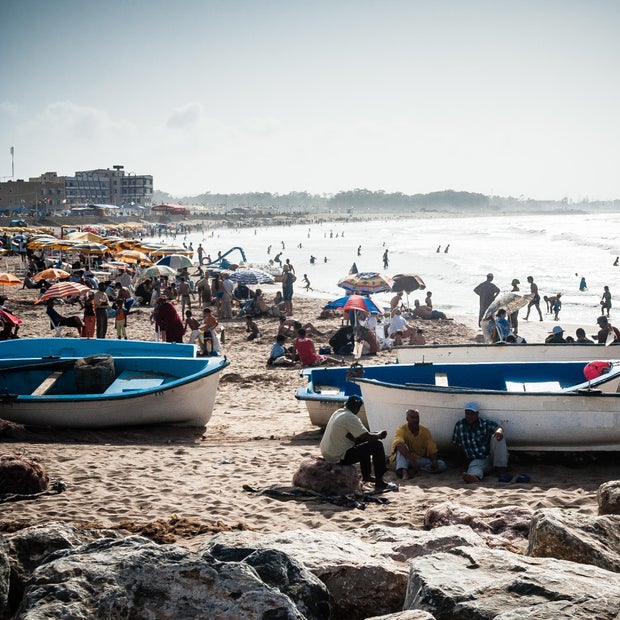
一 | Two men jet skiing off the coast of Morocco were shot dead by the Algerian coast guard after running out of gas and accidentally straying across the maritime border, Moroccan media reported Thursday. A survivor of the incident, Mohamed Kissi, told local media that he and three friends, several of whom were French-Moroccan nationals, had been jet skiing around Saidia, close to the Morocco-Algeria border."Around 5:30 p.m., we got lost. We were running out of gas for the jet skis and were drifting. In the dark, we found ourselves in Algerian waters," he told the Le360 news website on Thursday.The Algerian coastal town of Marsa Ben M'Hidi, known as Port-Say during the French colonial period, just over the border from Morocco's Saidia, near where the jet ski incident took place. Fahim Samere via Getty An Algerian coast guard patrol approached the four jet skiers in an inflatable boat, Kissi said, and spoke to his brother Bilal. He said the four men thought they were going to get help, when suddenly the Algerian forces started shooting. "They clearly saw that we were unarmed, my little brother spoke to them and yet they fired," he said."Thank God I wasn't hit," Kissi told Moroccan newspaper Al Omk. "But they killed my brother and my friend."
Moroccan media identified Bilal Kissi, 29, and Abdelali Mechouer, 40, as the two men killed. Kissi said he swam toward his brother and Abelali, calling their names, to try to help, before turning to swim as fast as he could back toward Morocco, where he was picked up by a Moroccan police patrol boat that was out looking for the men.An unverified video posted online — reportedly by a Moroccan fisherman — showed a body wearing a life-jacket floating face-up in the clear blue water.According to Moroccan media, the fourth member of the group, Smail Snabe, was shot and wounded in the incident and was being held in Algeria.
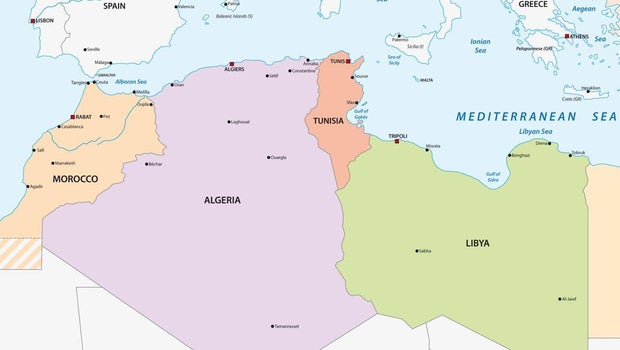
Authorities in Paris confirmed Friday that a French citizen was killed in Algeria, without identifying the victim. French officials also said another citizen was jailed in Algeria after "an incident involving several of our nationals."French television channel BFMTV reported that the second man who was killed was Moroccan.The Algerian coast guard did not respond to requests for comment from the AFP news agency. A Moroccan government spokesperson refused Thursday to comment on the incident.A map shows the northwest African nations' Mediterranean and Atlantic coasts. Getty/iStockphoto The border between the two countries at Saidia is only a "thin jetty," according to Le360.The border between the two countries has been closed since 1994, and tense relations between Morocco and Algeria have been aggravated by a long-running feud over the disputed Western Sahara region.In August 2021, Algeria severed diplomatic ties, accusing Morocco of "hostile acts," which Moroccan leaders called "completely unjustified."
。 (ECNS) -- An "Ice Silk Road" is emerging in the Arctic, offering China and Europe a shorter maritime link and, more importantly, a new option for navigating an increasingly uncertain global trading environment. Chinese container shipping company Sea Legend Line has announced plans to launch the first regular container service across the Arctic. The route is set to begin its maiden voyage on Saturday and will operate weekly, with eight voyages scheduled. The route underwent a trial voyage last autumn. In September 2025, the container ship "Istanbul Bridge" departed from Ningbo-Zhoushan Port and arrived at the Port of Felixstowe in the United Kingdom 20 days later. The new China-Europe Arctic Express will pass through the Bering Strait and sail westward along the Northeast Passage, reaching Felixstowe in the United Kingdom in just 18 to 20 days before connecting with ports in Germany, the Netherlands and Poland. By comparison, shipments from China's Ningbo-Zhoushan Port to Europe via the Suez Canal typically take at least 40 days. Rerouting around the Cape of Good Hope due to congestion or geopolitical disruptions can extend transit times to more than 50 days. The Arctic route could offer significant advantages in both speed and cost. Faster deliveries would allow Chinese manufacturers to reduce inventory levels and accelerate cash flow. Reports suggest that companies using the route could cut inventories by as much as 40%. The naturally low temperatures along the route could also make it suitable for transporting high-value, temperature-sensitive cargo, including precision instruments and new-energy batteries. Carbon emissions are expected to be nearly half those of traditional routes, according to reports. The route also bypasses major maritime chokepoints and areas affected by geopolitical tensions, including the Strait of Malacca, the Red Sea and the Gulf of Aden. This could provide companies with an additional option for improving the stability and resilience of their supply chains. However, the route also faces significant challenges. Sea ice limits the navigable season to roughly late July through October, while port services, supplies and emergency-response infrastructure along the route remain limited. It therefore cannot yet operate year-round and is unlikely to replace the Suez Canal route in the short term. Nevertheless, the Arctic route could strengthen the resilience and diversification of China-Europe trade. Together with land-based routes such as the China-Europe Railway Express, it could give China more options for transporting goods to European markets and reduce reliance on traditional southern maritime routes. Italian financial newspaper Il Sole 24 Ore described the route, dubbed the "Ice Silk Road," as a symbolic revival of the ancient trade links between East and West. As new shipping routes emerge across the Arctic, the geography of global trade may gradually be reshaped, giving international supply chains more options in an increasingly uncertain geopolitical environment. (By Gong Weiwei) 。
Current article:http://fqrf.suiyangguiduanzudoushaopao.buzz/list_3td/l2q.html



 。
。